Jewelry Care Guide: How to Keep Your Jewelry Beautiful for Years

Introduction
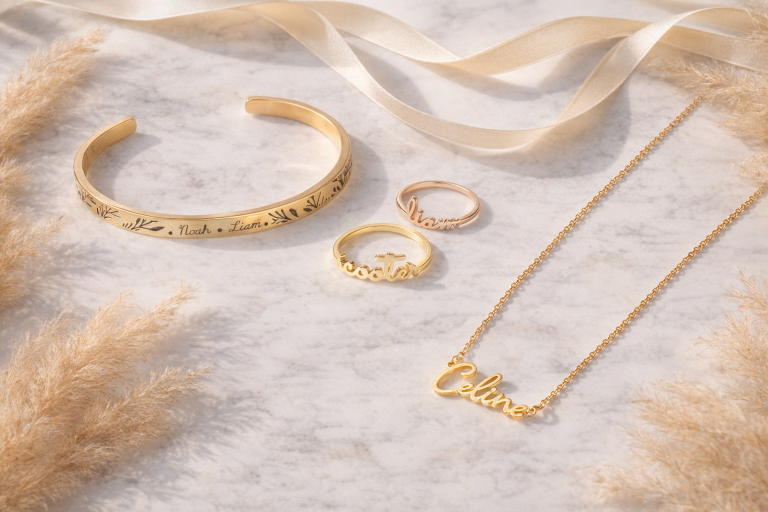
Jewelry is more than an accessory. For many people, it represents memories, milestones, and meaningful relationships. A necklace may celebrate a special moment, an engraved bracelet may carry a personal message, and a birthstone ring may symbolize identity and family.
Because jewelry often holds emotional value, proper care becomes essential. With the right habits, you can keep your jewelry shining and protect delicate details such as engravings, gemstones, and personalized designs.
This jewelry care guide explains how to clean, store, and maintain jewelry safely so it remains beautiful for many years.
Why Proper Jewelry Care Matters
Even high-quality jewelry can lose its shine if it is not maintained properly. Over time, exposure to moisture, cosmetics, chemicals, and everyday wear gradually affects the surface of metals and gemstones.
For example, perfumes and lotions can dull plated metals, while humidity can accelerate tarnishing on silver jewelry. In addition, small particles such as dust or sand can create tiny scratches on delicate surfaces.
However, a few simple precautions can significantly extend the life of your favorite pieces.
Proper jewelry care helps you:• maintain the brilliance of metals and gemstones• prevent scratches and tarnish• extend the lifespan of delicate pieces• protect engraved or personalized designs• preserve sentimental and monetary value
Because of these benefits, developing good jewelry care habits is one of the best ways to protect your collection.
Jewelry Care Guide for Everyday Wear
Jewelry that you wear daily requires special attention. Unlike pieces stored occasionally, everyday jewelry is constantly exposed to environmental factors.
Therefore, adopting a few simple habits can prevent damage before it happens.
Avoid Contact With Chemicals
Many beauty and cleaning products contain substances that can damage jewelry over time. Perfumes, lotions, hairspray, and household cleaning solutions often contain chemicals that react with metals.
In particular, plated jewelry and sterling silver are more sensitive to these substances.
For best results, follow this simple rule:
Apply cosmetics, perfume, and skincare products before putting on your jewelry.
This small habit prevents chemical residue from accumulating on the surface of your jewelry.
Remove Jewelry During Certain Activities
Some everyday activities can put unnecessary stress on jewelry pieces. Therefore, removing jewelry before certain tasks can prevent accidental damage.
It is best to take off jewelry when:• swimming in pools or the ocean• exercising or playing sports• showering or bathing• cleaning the house• gardening or doing manual work
Chlorine, salt water, and physical impact can weaken metals and loosen gemstones. As a result, removing jewelry during these activities protects both the structure and appearance of your pieces.
How to Clean Jewelry Safely
Regular cleaning helps restore the brilliance of jewelry. Fortunately, most pieces can be cleaned easily at home using gentle methods.
However, it is important to avoid harsh chemicals or abrasive materials that may damage delicate surfaces.
Gentle Jewelry Cleaning Method
Follow these simple steps to clean most types of jewelry safely:
1. Fill a small bowl with warm water2. Add a few drops of mild liquid soap3. Let the jewelry soak for 5–10 minutes4. Use a soft toothbrush to remove dirt5. Rinse the piece with clean water6. Dry gently with a soft microfiber cloth
Because this method is gentle, it works well for most metals and gemstones.
Important: avoid abrasive sponges, strong detergents, or toothpaste, which can scratch jewelry surfaces.
Cleaning Engraved or Personalized Jewelry
Personalized jewelry often includes delicate engravings such as names, initials, fingerprints, or coordinates. These details require careful cleaning to avoid damage.
Because engraved areas can trap dirt or residue, they should be cleaned gently with a soft brush.
To clean engraved jewelry safely:• use a soft toothbrush• clean gently around engraved areas• avoid harsh chemicals• rinse carefully with clean water
Taking extra care helps maintain the clarity and depth of engraved designs.
How to Store Jewelry Properly
Storage plays a major role in protecting jewelry from scratches, tarnish, and damage. In fact, improper storage is one of the most common causes of jewelry deterioration.
Fortunately, a few simple storage habits can keep your jewelry safe.
Use Separate Compartments
When jewelry pieces are stored together, they often rub against each other. As a result, metals and gemstones may develop scratches.
Therefore, storing jewelry separately is essential.
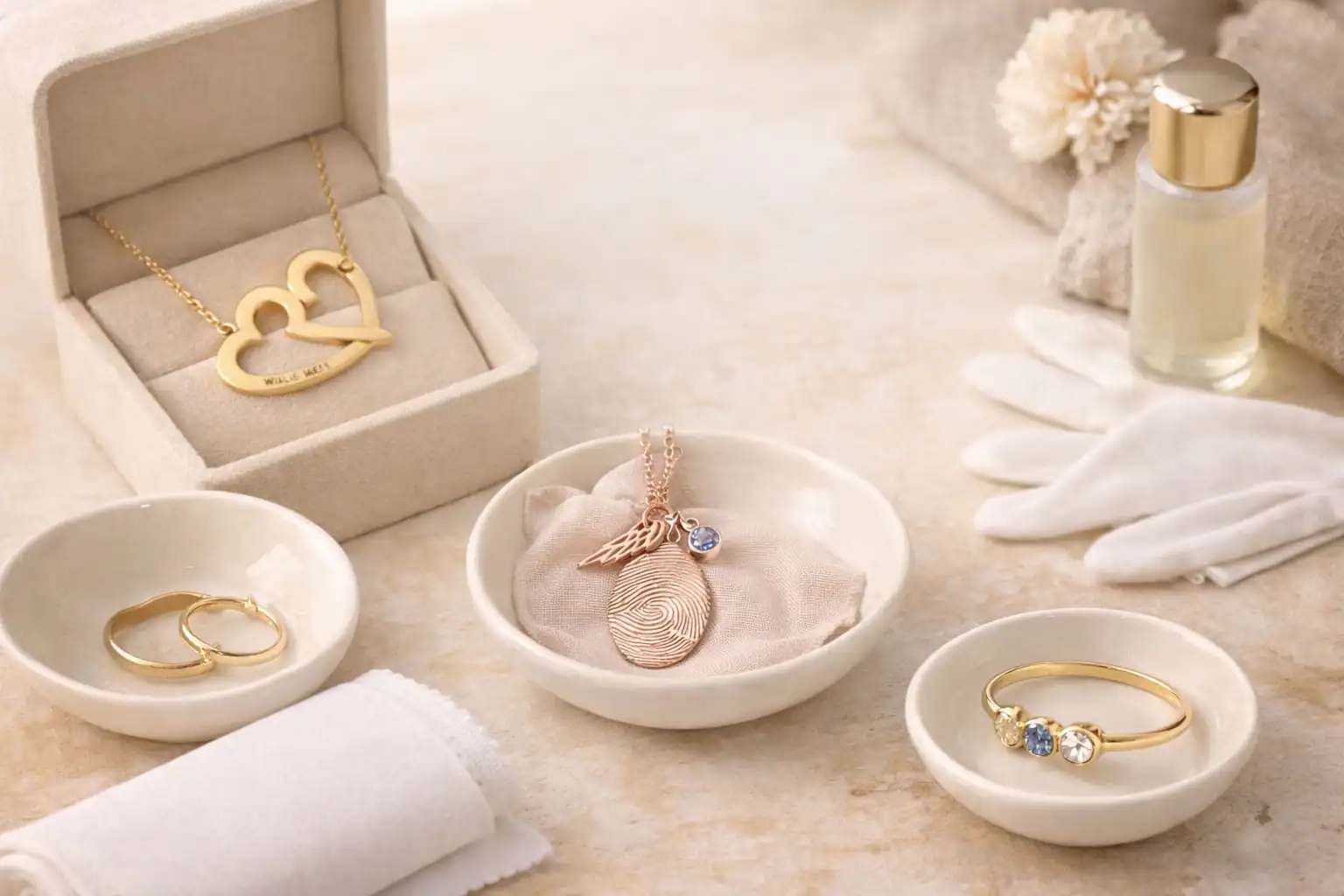
Ideal storage options include:• jewelry boxes with compartments• soft fabric pouches• velvet-lined trays• individual zip pouches for travel
Keeping pieces separated reduces friction and prevents unnecessary wear.
Keep Jewelry in a Dry Environment
Humidity accelerates tarnishing, especially for silver jewelry. Therefore, jewelry should always be stored in a cool, dry place.
Bathrooms are usually not ideal storage locations because moisture levels tend to be higher.
Instead, store jewelry in:• bedroom drawers• jewelry boxes with anti-tarnish lining• dry closets or dressers
Using silica gel packets in jewelry boxes can also help absorb moisture.
Travel Tips for Protecting Jewelry
Traveling with jewelry requires additional care. Without proper protection, pieces can become tangled, scratched, or lost.
To protect jewelry during travel:• use a travel jewelry organizer• wrap delicate pieces in soft fabric• keep necklaces clasped to prevent tangling• avoid packing jewelry loosely in bags
These precautions ensure that jewelry remains safe even during long trips.
When to Have Jewelry Professionally Checked
Although regular home care is important, professional inspection is sometimes necessary. Jewelry with sentimental or financial value should occasionally be examined by a professional jeweler.
For example, a jeweler can:• check gemstone settings• polish metal surfaces• repair worn clasps or chains• clean difficult areas
Professional maintenance helps identify small problems before they become major repairs.
Conclusion
Jewelry often carries stories, emotions, and meaningful memories. Because of this, proper care helps preserve not only its beauty but also its significance.
By following simple habits—such as cleaning jewelry regularly, avoiding chemicals, storing pieces properly, and removing jewelry during certain activities—you can significantly extend the life of your collection.
Over time, well-maintained jewelry becomes a lasting reminder of important moments and meaningful relationships.